ServicesReverse Osmosis
Reverse Osmosis in Chandler, Sized From Your Water Test
A reverse osmosis system pushes your kitchen water through a fine membrane that holds back dissolved minerals and many trace contaminants. We test your water first, then pick the stages, tank and faucet that fit what we find under your sink.
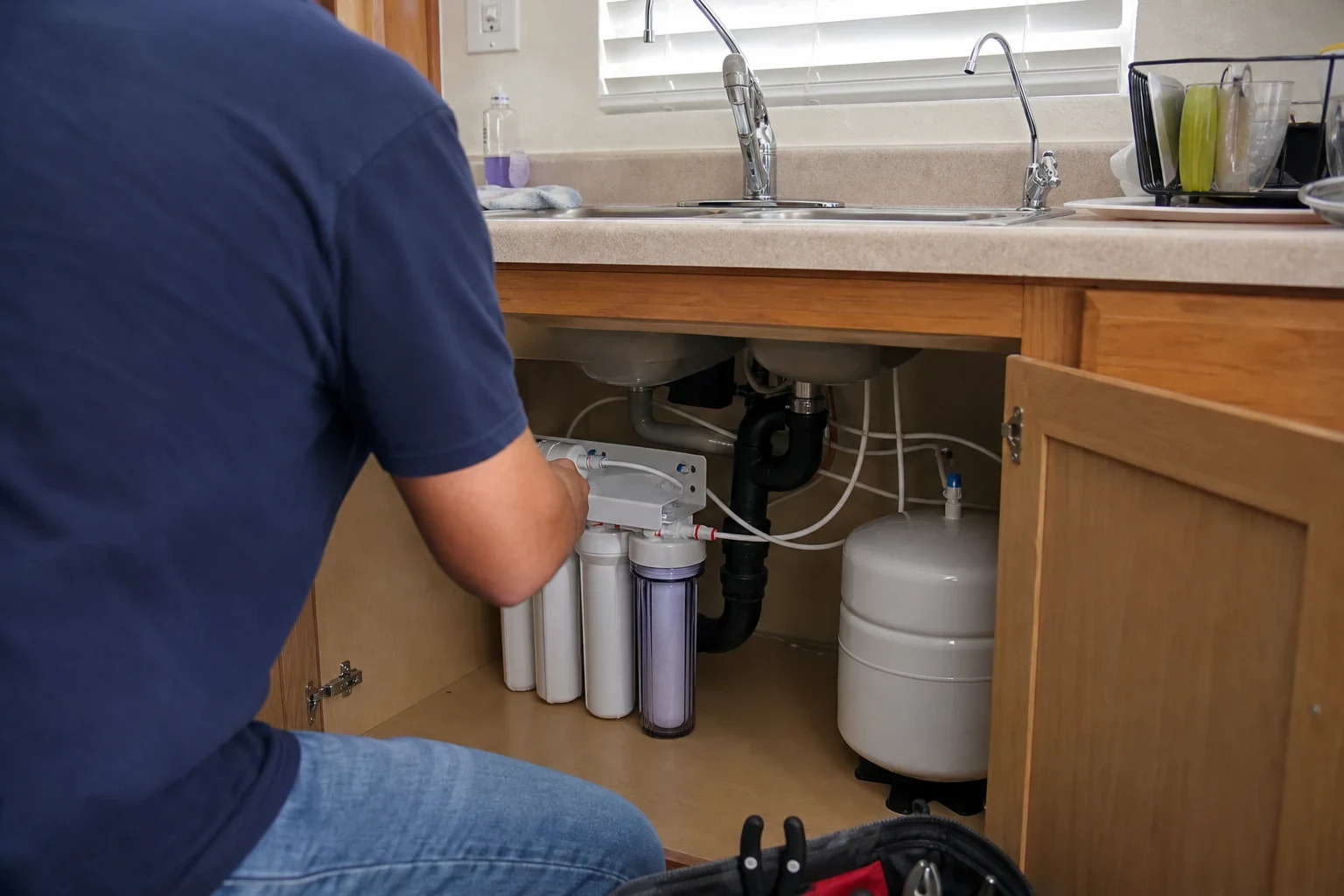
What Reverse Osmosis Does and When It Fits
An RO unit serves a single tap rather than the whole house. In most kitchens that means its own small faucet beside the main one, and often the refrigerator's ice and water line as well. It is the right call when the glass you pour and the pot you fill for pasta are what bother you: mineral taste, high total dissolved solids, chlorine flavor, or a wish for more protection against trace contaminants than a pitcher filter gives.
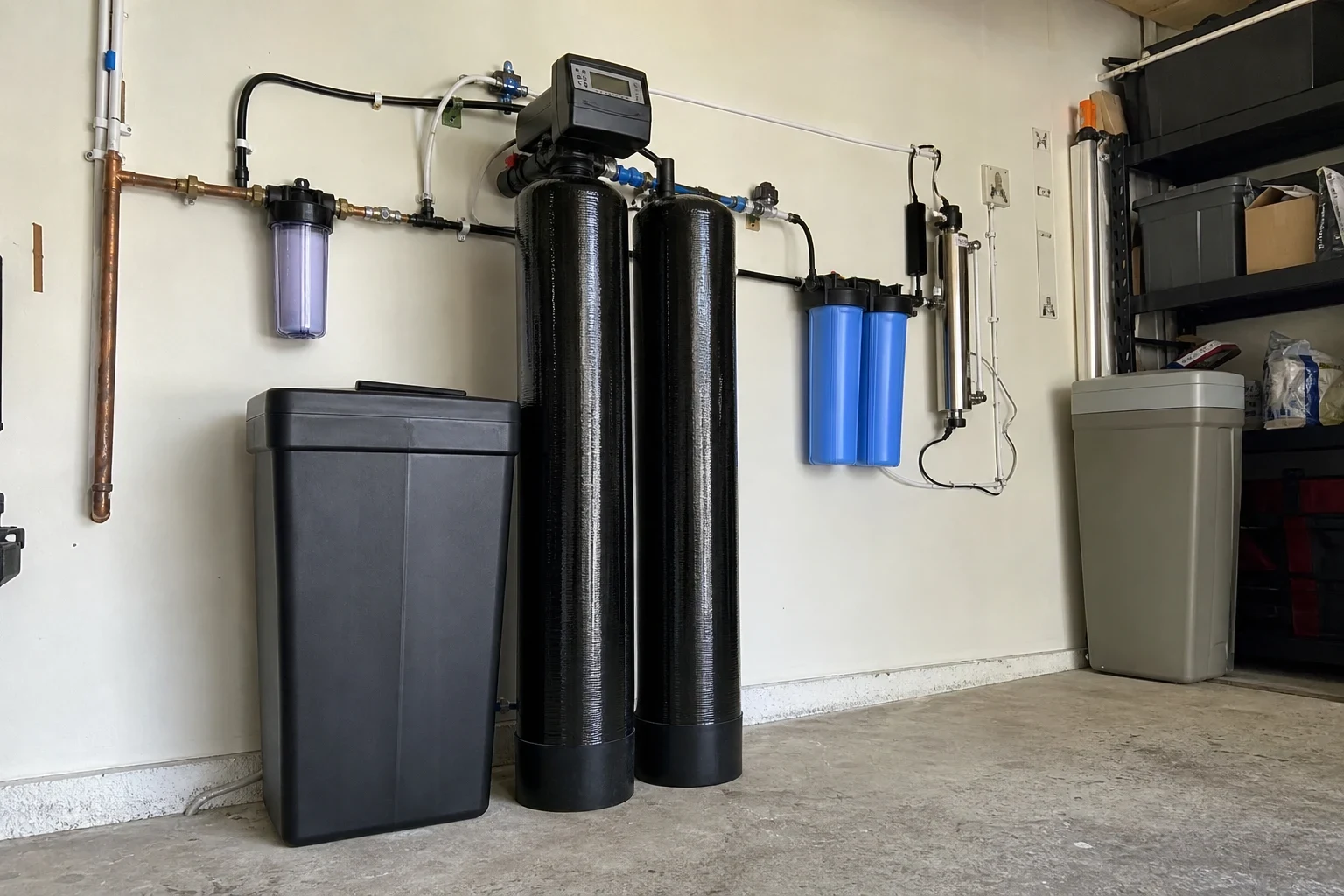
It is not a whole-house fix. If your issue is scale on fixtures, spotty dishes or dry skin in the shower, a water softener or whole-home filtration addresses that at the main line. That is why we start with a test. A TDS reading, a hardness number and a chlorine check tell us whether an RO unit solves your problem, or whether you need something else, or both.
The install is included with the system, so the number you hear covers equipment and labor together.
The Parts We Fit Under Your Sink
Prefilter stages
First comes a sediment cartridge that traps sand, scale flakes and bits of pipe debris. Behind it sits a carbon block that strips out chlorine, which would otherwise attack the thin-film composite membrane and shorten its life.
The membrane itself
We size the membrane by gallons per day to match how much drinking and cooking water your household uses. The membrane is where dissolved minerals and most trace contaminants are held back and rinsed to drain.
Storage tank or tankless unit
Tank systems use a pressurized bladder tank so the faucet flows at a usable rate. Tankless units save cabinet space but need steady line pressure, so we check that first.
Feed valve, drain saddle and air gap
We tee off the cold supply with a dedicated shut-off and clamp a drain saddle on the sink drain. An air-gap faucet, where your setup calls for one, keeps drain water from backing up into the system.
Post filter and faucet
A final carbon polishing filter takes out any taste the tank picks up. We mount the faucet in an existing sprayer hole or drill the countertop after walking through the spot with you.
Refrigerator tie-in if you want it
Tubing can run from the RO tank to your fridge's inlet valve, so the dispenser and ice maker draw filtered water as well.
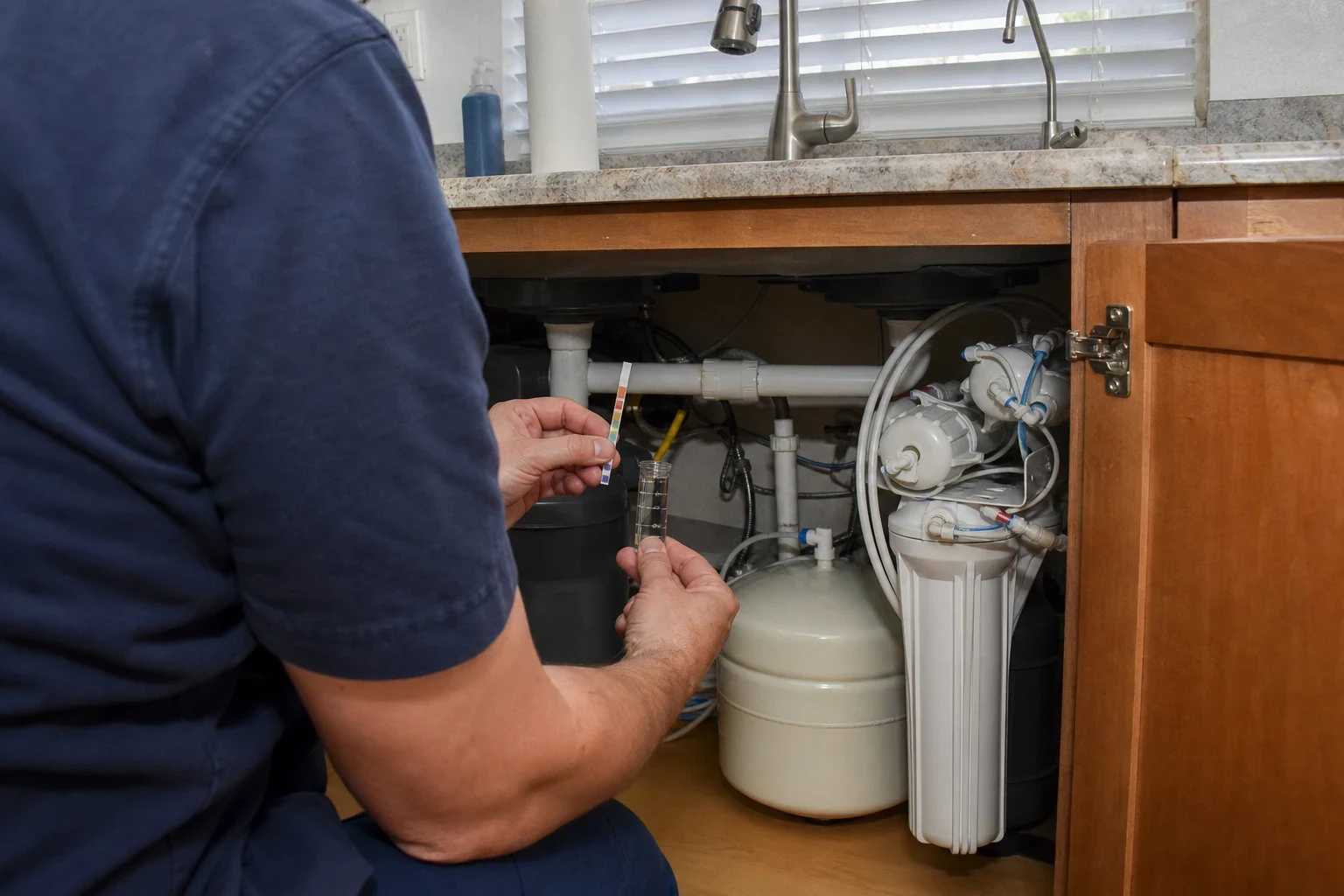
When an Under-Sink RO Unit Makes Sense
- Bottled water cases stack up in the pantry
- When no one at home will drink from the tap, a separate RO faucet ends the weekly trips to the store and all the plastic that comes home with them.
- Scale coating the kettle and coffee maker
- That residue is dissolved mineral left after water is heated. RO takes most of it out of your drinking and cooking water.
- Murky ice or water that tastes of minerals
- Heavy dissolved solids show in your ice cubes and in plain water that tastes flat or a little salty.
- An existing RO unit that trickles or drains nonstop
- Weak flow usually means a plugged prefilter, a worn-out membrane or a tank that lost its air charge. Draining that never stops often means the shut-off valve has failed. We pin down the failed part before recommending anything new.
- Worry about aging pipes
- In homes with older fixtures or solder, a lab test shows what's actually coming out of the tap, and RO ranks among the stronger choices for drinking water.
How the Job Runs
- 1
Free water test
We check TDS, hardness, chlorine and line pressure at your tap. The test is free and comes with zero obligation.
- 2
An honest recommendation
We explain what the numbers mean and whether RO fits. If hardness is high, we tell you a softener upstream will help the membrane last longer, and you decide.
- 3
Installation under your sink
One of our licensed and insured partner plumbers empties the cabinet, puts down a protective mat, connects the feed, drain and faucet, and mounts the unit so the filter housings are easy to reach. A typical kitchen job wraps up within part of a day.
- 4
Rinse, readings and handoff
The first tankful goes to drain to clear carbon fines and the membrane's preservative. We look over each push-fit connection for weeping, then measure TDS at the new faucet so you can compare it with the tap reading. Before we leave, you see how each housing opens and the cabinet is put back clean.
What Moves the Price of an RO System
Once we know your readings and have seen the cabinet under your sink, we can give you installed system pricing by phone. That single figure already folds in the labor, since the install comes with the system. The factors below are what push it up or down.
- Number of stages
- A basic setup with prefilters, membrane and polishing filter is the simplest build. Adding a remineralization cartridge or a UV lamp raises the equipment cost, so we include those only when your readings point to them.
- Tank versus tankless
- Tankless units carry a higher equipment cost but free up cabinet space.
- Water pressure
- Membranes need adequate pressure to work efficiently. Low pressure can mean adding a booster pump.
- Countertop and routing
- Drilling quartz or granite for a faucet, or running a line to a refrigerator across the kitchen, adds labor.
Reverse Osmosis Questions
- Does an RO system waste water?
- All RO units send a share of water down the drain to flush the membrane. The amount depends on the membrane, your line pressure and whether there's a permeate pump. Once we've measured your pressure, we can tell you what to expect.
- How often do the filters and membrane get replaced?
- The prefilters and post filter usually get swapped about once a year. The membrane goes longer, though very hard or high-TDS water wears it out sooner. We can show you how to change them yourself, or do it for you.
- Does RO strip out good minerals?
- Yes, it takes out most dissolved minerals, calcium and magnesium included. Food supplies most of those for most people, and if you like the taste of mineral water, a remineralization stage puts some back.
- Does RO need a softener alongside it?
- It depends. Hard water builds scale on the membrane sooner, so a softener ahead of it can make it last longer while also protecting your fixtures and water heater. Your test numbers show whether that's worth doing in your home.
- What if a connection leaks down the road?
- Your RO system comes with a 5-year warranty on installation and labor. If a drain saddle, feed valve or tubing joint we installed begins to drip, we send someone out to fix it.
- Who installs the system?
- The install is done by licensed and insured partner plumbers, and we stay your point of contact from the water test to the final walk-through. Our 3 five-star Google reviews so far show how that setup has worked for customers.
Know What Your Tap Holds Before You Pick a System
We test the water at your tap, walk through the numbers and say whether reverse osmosis solves your problem. If it does, we give you installed system pricing during that same call.