ServicesWhole-Home Filtration
Whole-Home Filtration in Chandler, Sized From Your Own Readings
Mounted on your main line, a whole-home system filters every gallon before it reaches a faucet, so showers, laundry and the kitchen tap all lose the chlorine taste and smell. We test your water first, then pick the carbon type and tank size your supply calls for.
What a whole-home filter does, and what it doesn't
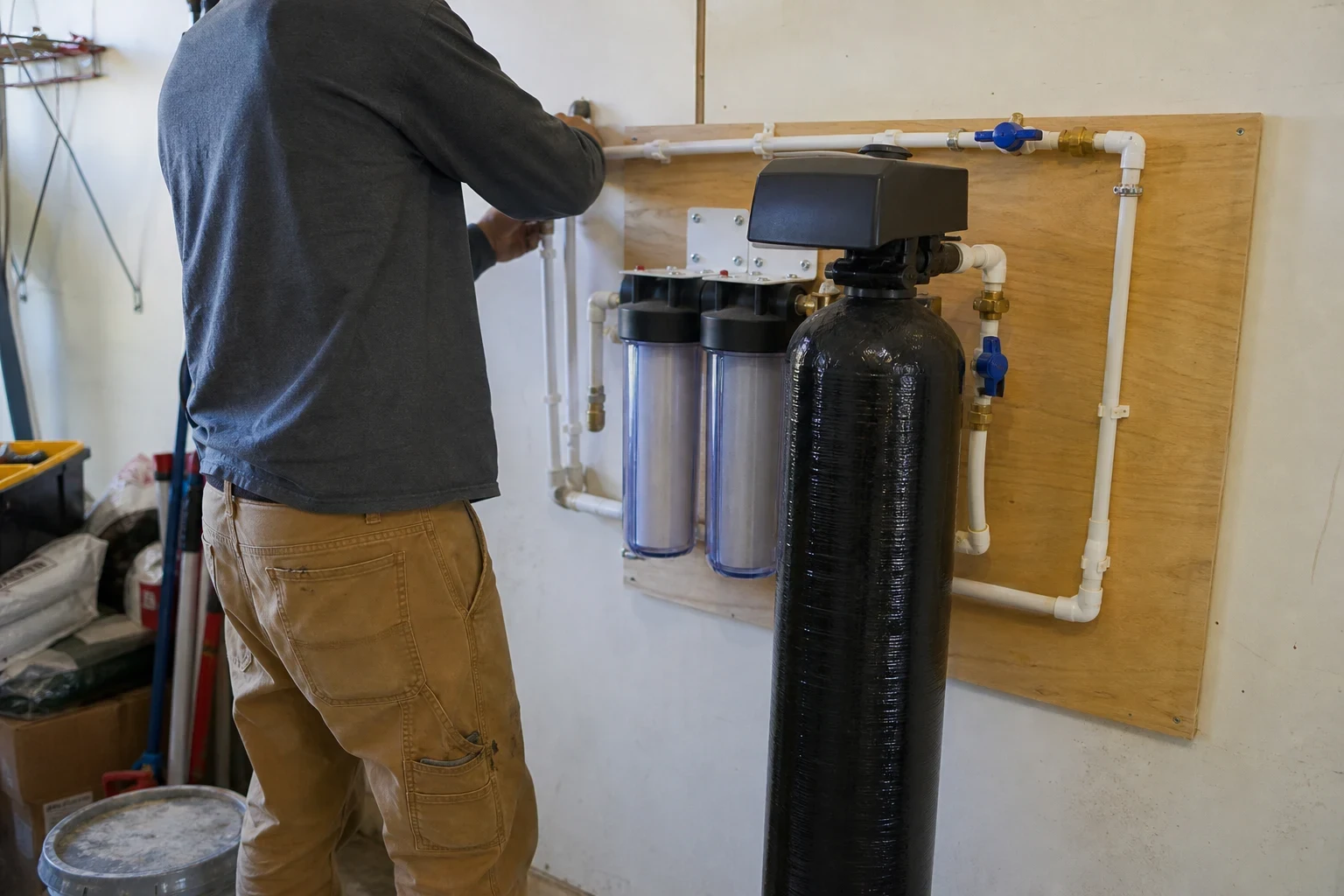
A whole-home filter sits on your main water line, usually where it enters the garage, so every tap, shower and appliance gets treated water. Most systems pair a sediment prefilter with a tall tank of activated carbon. The carbon holds on to chlorine, chloramine and the taste and odor compounds that come with them, and it does that without adding anything to the water.
It will not soften water. Calcium and magnesium pass straight through carbon, so the white crust common on East Valley fixtures needs a water softener, not a bigger filter. That is why we start with a free water test. If the real issue is hardness, or something in your drinking water that reverse osmosis handles better, we tell you which and explain why before you spend anything.
What's included in a whole-home filtration install
- A water test before any equipment
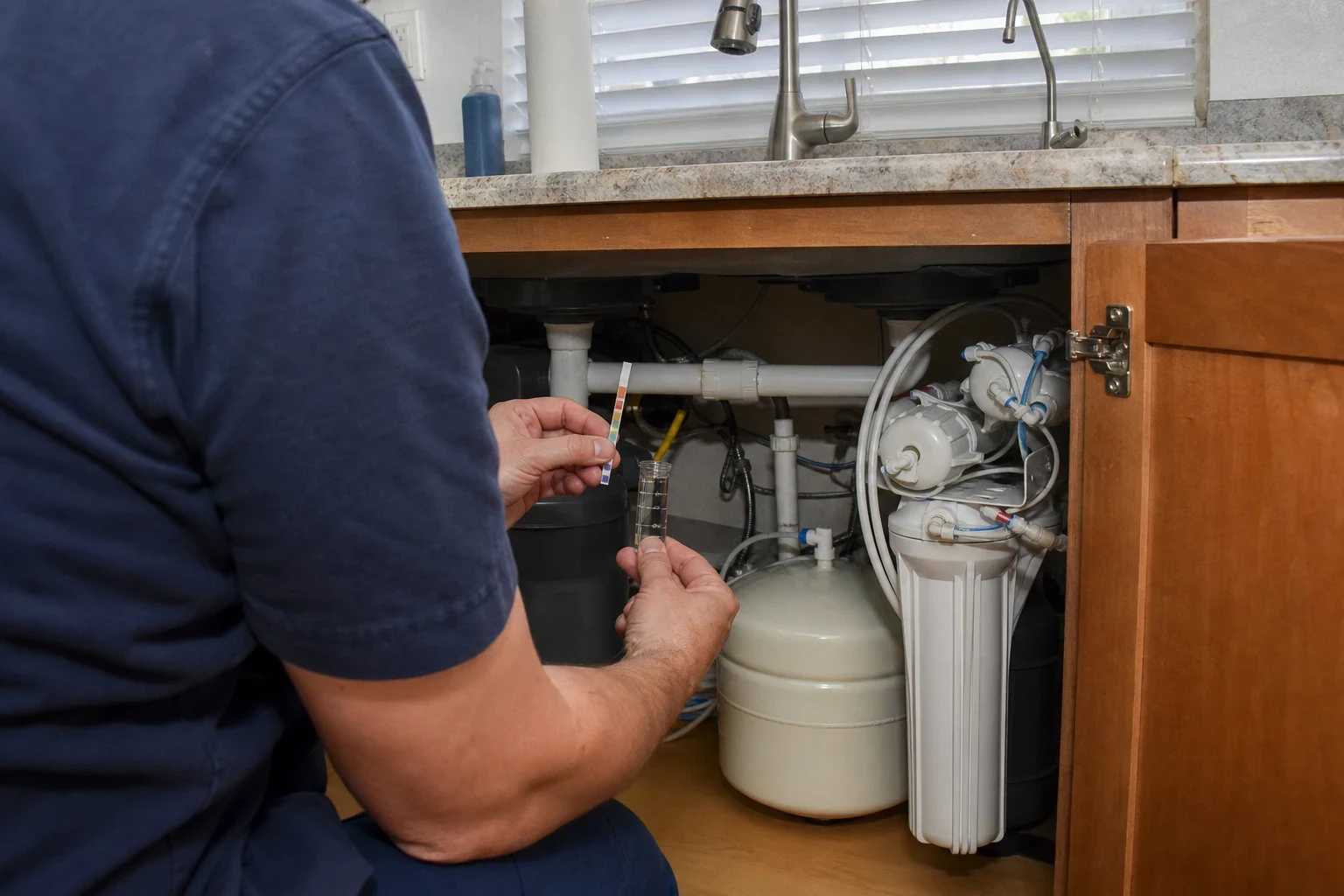
- We check chlorine, hardness, pH and total dissolved solids at your kitchen tap. Those readings decide the media, the tank size and whether a prefilter is worth adding.
- Media matched to your disinfectant
- Standard granular activated carbon handles free chlorine well. If your supply is treated with chloramine, we specify catalytic carbon, which breaks down the chlorine-ammonia compound that ordinary carbon struggles to remove.
- A tank sized to your peak flow
- We count bathrooms and fixtures so two showers and the dishwasher running together don't drag your pressure down. An undersized tank also lets water rush past the carbon before it has enough contact time to work.
- Sediment prefilter and bypass valve
- A sediment cartridge ahead of the carbon catches sand and loose pipe scale so the media lasts longer. A bypass valve lets you take the system out of the loop for service without shutting off water to your home.
- Plumbed to code, with the labor covered
- Our licensed and insured partner plumbers tie into the main line, add a grounding jumper wherever copper is cut and pressure-test every joint. Install is included with the water treatment systems we sell. Both the installation and the labor are backed by a 5-year warranty.
- Cleanup and a short walkthrough
- We haul away packaging and old fittings, then show you the bypass, the prefilter housing and how to tell when media is due.
Signs your home could use whole-house filtration
The shower smells like a pool
Hot water releases chlorine as vapor, so the smell is strongest in a closed bathroom. A kitchen pitcher filter can't touch that.
Your pitcher or fridge filter can't keep up
If you're swapping cartridges often and still taste chlorine in ice or coffee, treating the whole supply is usually simpler than filtering one tap at a time.
Grit in aerators and shower heads
Sand or small flakes caught in faucet screens mean sediment is moving through your pipes. A sediment cartridge stops it upstream of valves, the water heater and appliances.
Skin and hair feel dry after showering
Many people notice a difference once chlorine is out of their bath water. We'll test first so you know whether chlorine or hardness is the more likely cause.
White scale is the main complaint
That one points away from filtration. Scale comes from hardness minerals, and we'll tell you plainly if a softener is the right fix instead.
What moves the price of whole-home filtration
Your water and your plumbing set the number, not a fixed package. Once the test is done, we walk you through installed system pricing over the phone and list every tank, valve and fitting on it. That way install day brings no line items you haven't already heard about.
Carbon type
Catalytic carbon, needed when a supply uses chloramine, is priced higher than ordinary activated carbon. We only specify it when your test results call for it.
Tank size
More bathrooms and higher peak flow mean a larger tank and more media. Sizing to your actual fixtures keeps you from paying for capacity you won't use.
Where your main line runs
A pre-plumbed loop in the garage is the simplest tie-in. Cutting into copper or PEX elsewhere, or routing around a water heater, adds labor and fittings.
Pairing with other equipment
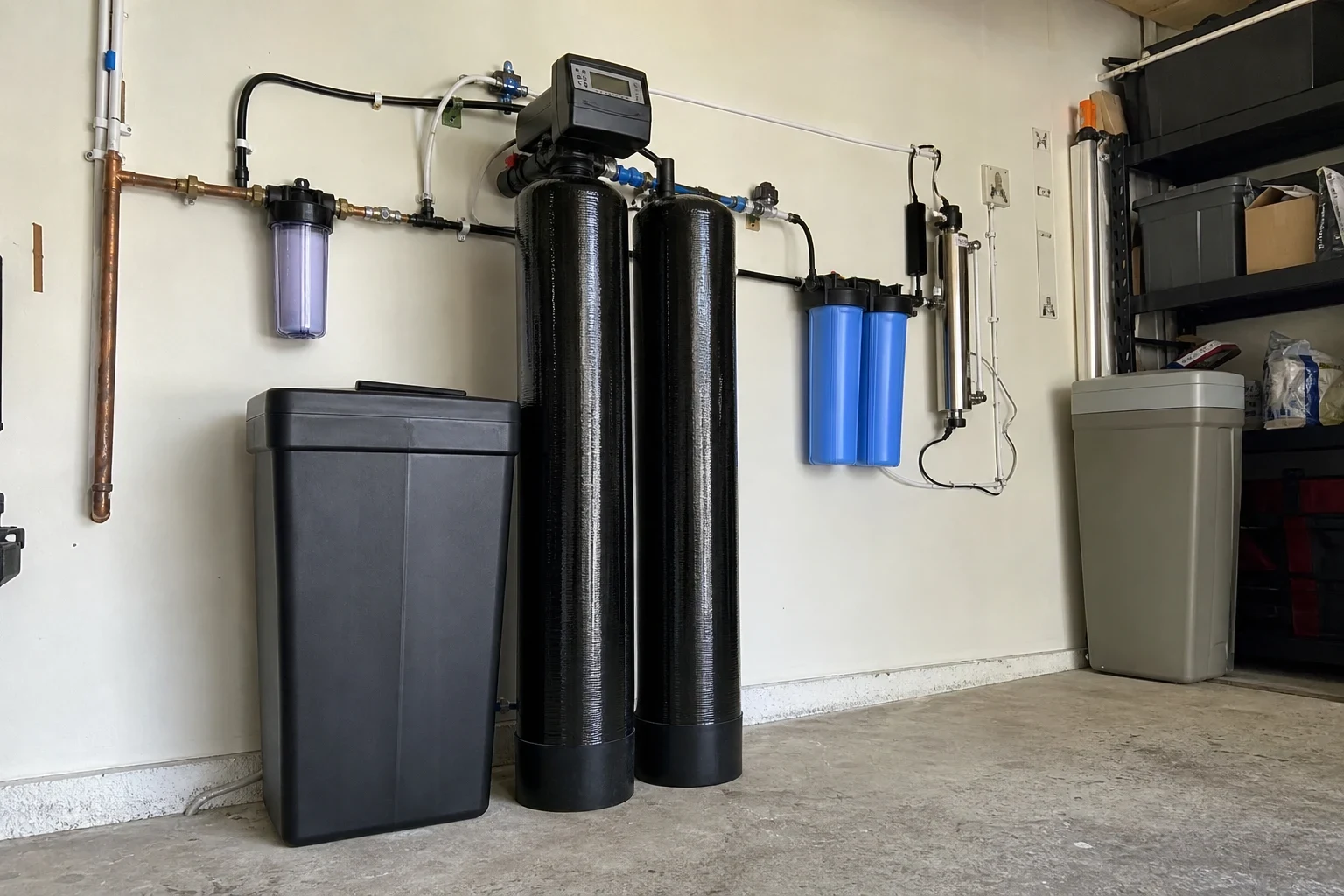
Adding a sediment prefilter or installing alongside a softener changes the parts list and the layout on the wall.
How a filtration install runs
- 1
No-cost water test
Call to schedule, and we test at your tap with zero obligation. We go over every reading and what it means for your plumbing.
- 2
A plain recommendation
We spell out the media, tank size and any prefilter, and why each suits your results. Installed system pricing comes by phone, with equipment and labor shown on separate lines.
- 3
Installation
Our partner plumber turns off the main and cuts in the bypass and tank, or ties into your garage's pre-plumbed loop if there is one. Most jobs take part of a day, and water comes back on once the joints hold under a pressure test.
- 4
Rinse and retest
Fresh carbon gives off fine black dust, so we run the tank until the water comes out clear. We then test chlorine at a tap to confirm the system is taking it out.
Whole-home filtration questions
Does whole-home filtration get rid of hard water spots?
No. Carbon catches chlorine and taste compounds, while calcium and magnesium flow right through. If scale and spots are your main complaint, a water softener solves that, and the test will show your hardness level.
Can one loop hold both a filter and a softener?
Yes, it's a setup we install often. The carbon tank sits first so chlorine is gone before water hits the softener, which helps keep the softener resin from breaking down over the years.
Will I also want reverse osmosis for drinking water?
Not necessarily. Whole-home carbon handles taste and odor at every faucet. Reverse osmosis goes a step further at a single tap by cutting dissolved solids and trace contaminants, so we only recommend it when your results or concerns call for it.
How often does the carbon media need replacing?
The timing depends on how many gallons your home sends through the tank and how much chlorine is in the supply. A tank of loose media lasts far longer than the small cartridges in pitchers and refrigerators. We estimate a schedule from your readings and household size. The sediment prefilter cartridge will need changing more often than the carbon.
Does a whole-home filter reduce water pressure?
A correctly sized system creates very little drop you'd notice. When pressure falls off, it's usually a tank too small for the fixtures or a sediment cartridge clogged with grit. We size from your fixture count and show you how to check the cartridge, so neither surprises you.
Find out what your water actually needs
Start with a free water test with zero obligation, then get installed system pricing once you know what's in your supply. Our 3 five-star Google reviews come from neighbors who started the same way.