ServicesWater Softeners
Water Softeners in Chandler, Sized From Your Hardness Reading
Scale on fixtures and spotty dishes usually point to hard water, but not always. We test your water first, then size the resin bed and set regeneration to your actual numbers, so the softener fits your home and the way you use water.
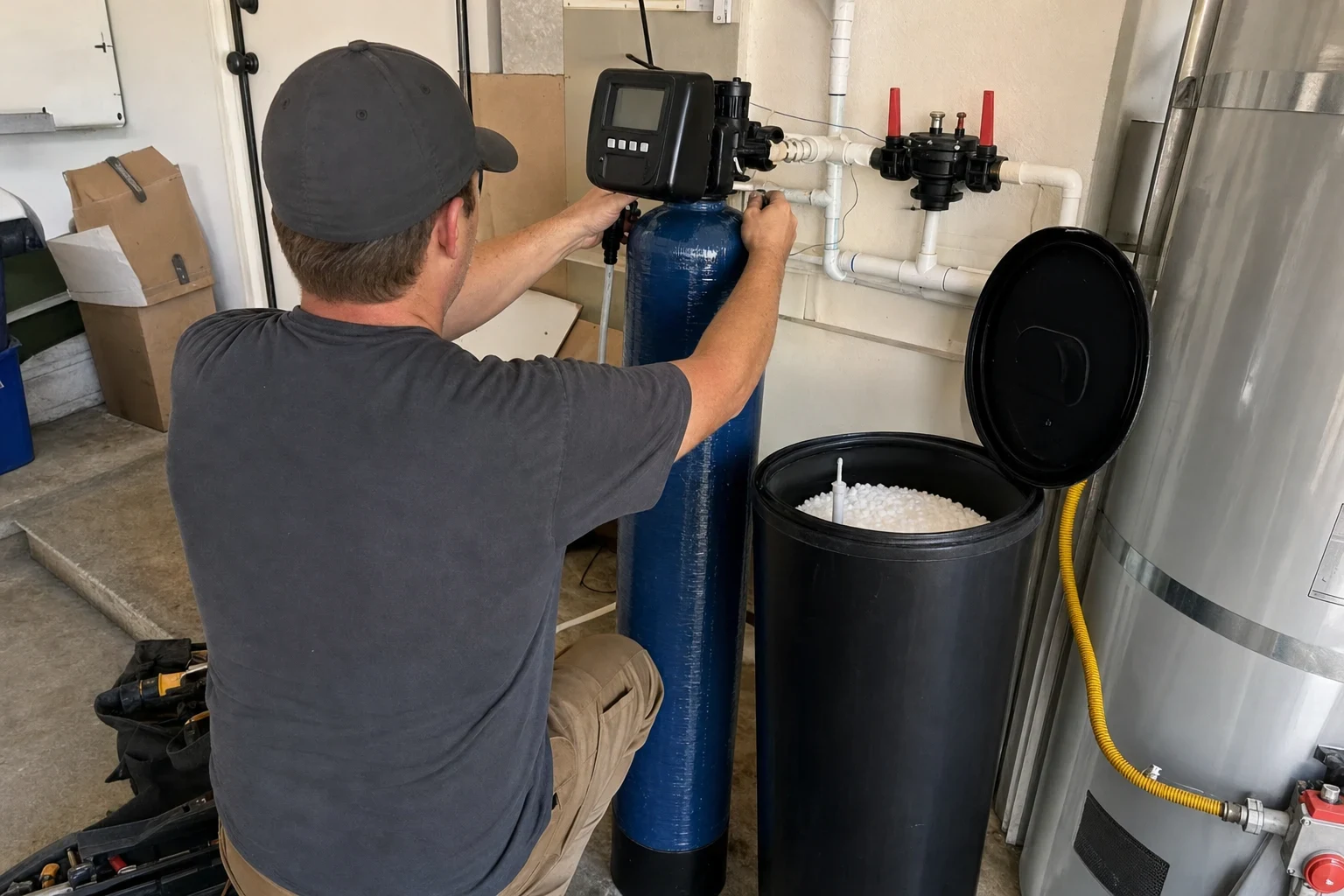
What a Softener Does and When It Is the Right Fix
Inside a softener, water passes through a bed of resin beads that exchange calcium and magnesium for sodium or potassium. Those two minerals cause the white crust on faucets and the scale inside water heaters, and they wear out dishwashers and washers early. Take them out where the line enters the house and every tap after that point gets the benefit.
Hard water shows up all over the Phoenix area, yet a softener fixes hardness and nothing else. It won't touch chlorine taste, and it doesn't filter drinking water. So we test before we price anything. If the numbers say your trouble is taste or odor, we'll point you to whole-home filtration or reverse osmosis instead, and we won't sell you a softener your home doesn't need.
What Your Softener Installation Includes
- No-cost hardness and iron check
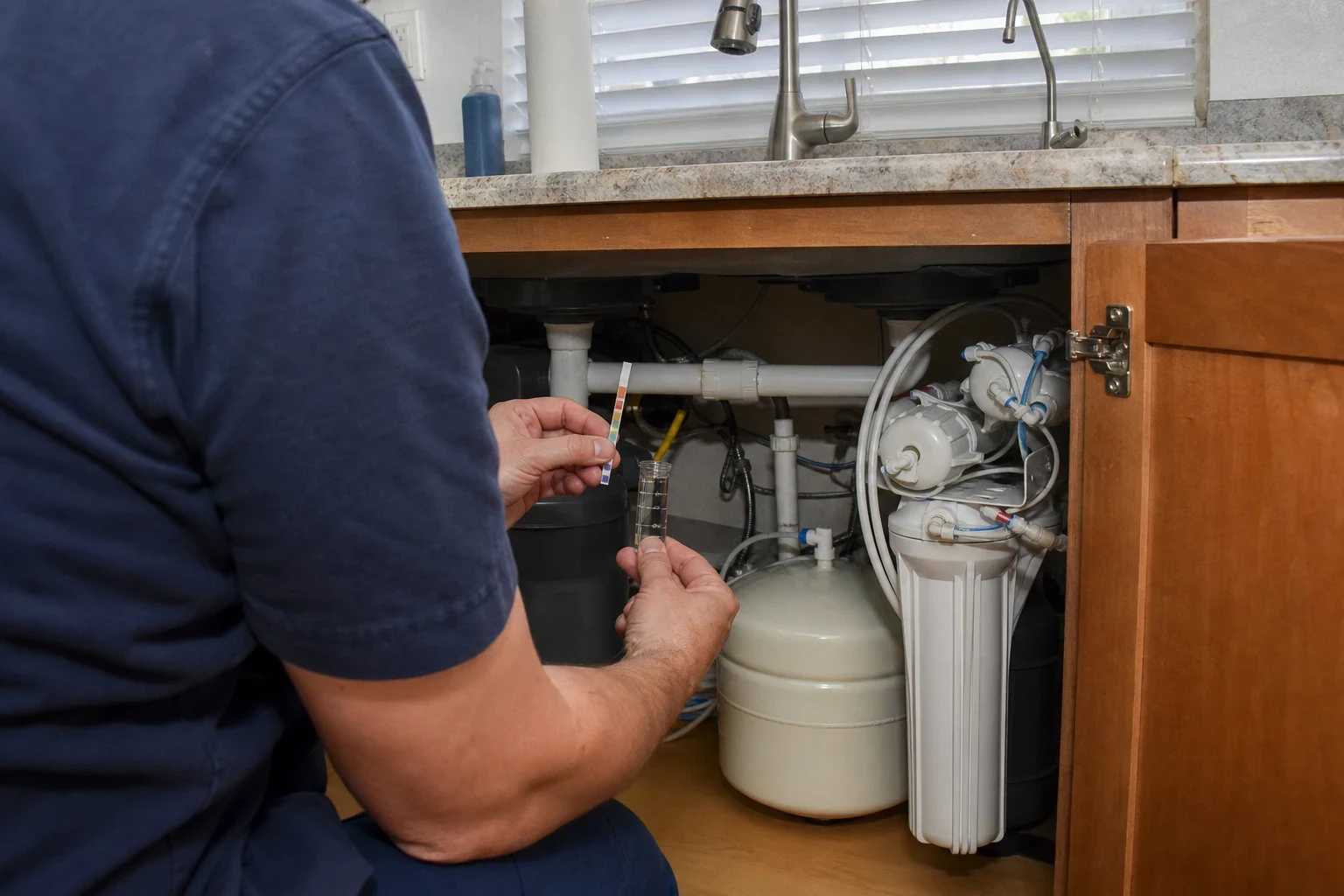
- We read hardness in grains per gallon and test for iron, which can clog resin if nobody catches it. There's no charge for the test and zero obligation afterward.
- Capacity matched to your home
- We get grain capacity by multiplying your hardness reading by the gallons your home uses daily. Too small a tank regenerates over and over and wastes salt and water. Too large a tank sits unused so long that water carves channels through the resin and some slips by untreated.
- Plumbing done by partner plumbers
- Every job's plumbing is handled by a partner plumber. The install comes included with the water treatment systems we sell, so you won't see a separate labor charge to figure out.
- Bypass valve and regeneration drain
- A bypass valve lets the unit be serviced while the rest of the house keeps water, and the regeneration drain gets a proper air gap so wastewater can't be pulled back in.
- Setup and first run
- We enter your hardness value and regeneration schedule into the control valve, rinse the resin and fill the brine tank before leaving.
- Installation and labor covered for 5 years
- A 5-year warranty covers our installation and labor. If a valve fitting or drain line we installed begins to drip or loosen in that time, we return and fix the work.
Signs Your Home May Need a Water Softener
Chalky crust on taps and shower heads
Every drop of hard water that dries on chrome leaves a trace of calcium carbonate. If a splash of vinegar makes the crust bubble and loosen, hardness is the probable source.
Glasses come out of the dishwasher spotted
Hard water leaves a mineral film that the rinse cycle can't wash off, and more rinse aid only hides it.
Popping and snapping from the water heater
As hard water warms, calcium falls out and settles on the bottom of the tank. Water trapped beneath that layer boils into steam and pops. The sediment also blocks heat from the burner or element, so every gallon costs more energy to warm.
Shampoo and soap barely foam
Hardness minerals tie up soap, so you go through more shampoo and detergent and still feel a film on your skin and towels.
An aging softener that no longer keeps up
Resin breaks down, control valves quit and salt can crust into a bridge in the brine tank. We see whether your current unit can be fixed before any talk of a new one.
What Moves the Price of a Water Softener
No two quotes are identical because no two homes use water the same way. The biggest drivers are how hard your water is and how much of it you go through. We explain each one before you decide, and installation is included with the system.
Grain capacity
Higher hardness and bigger households need more resin to go a reasonable stretch between regenerations, and a larger tank costs more.
Control valve type
Metered valves regenerate based on actual water used, which saves salt and water compared with timer valves. They cost more at the start.
Plumbing at the install spot
An existing softener loop with a nearby drain and outlet is straightforward. No loop, a long drain run or a tight location adds plumbing time.
Iron or other findings
If the test shows iron, the resin may need protection or a different media, which changes the equipment list.
Your Softener Install, Step by Step
- 1
Hardness reading at your tap
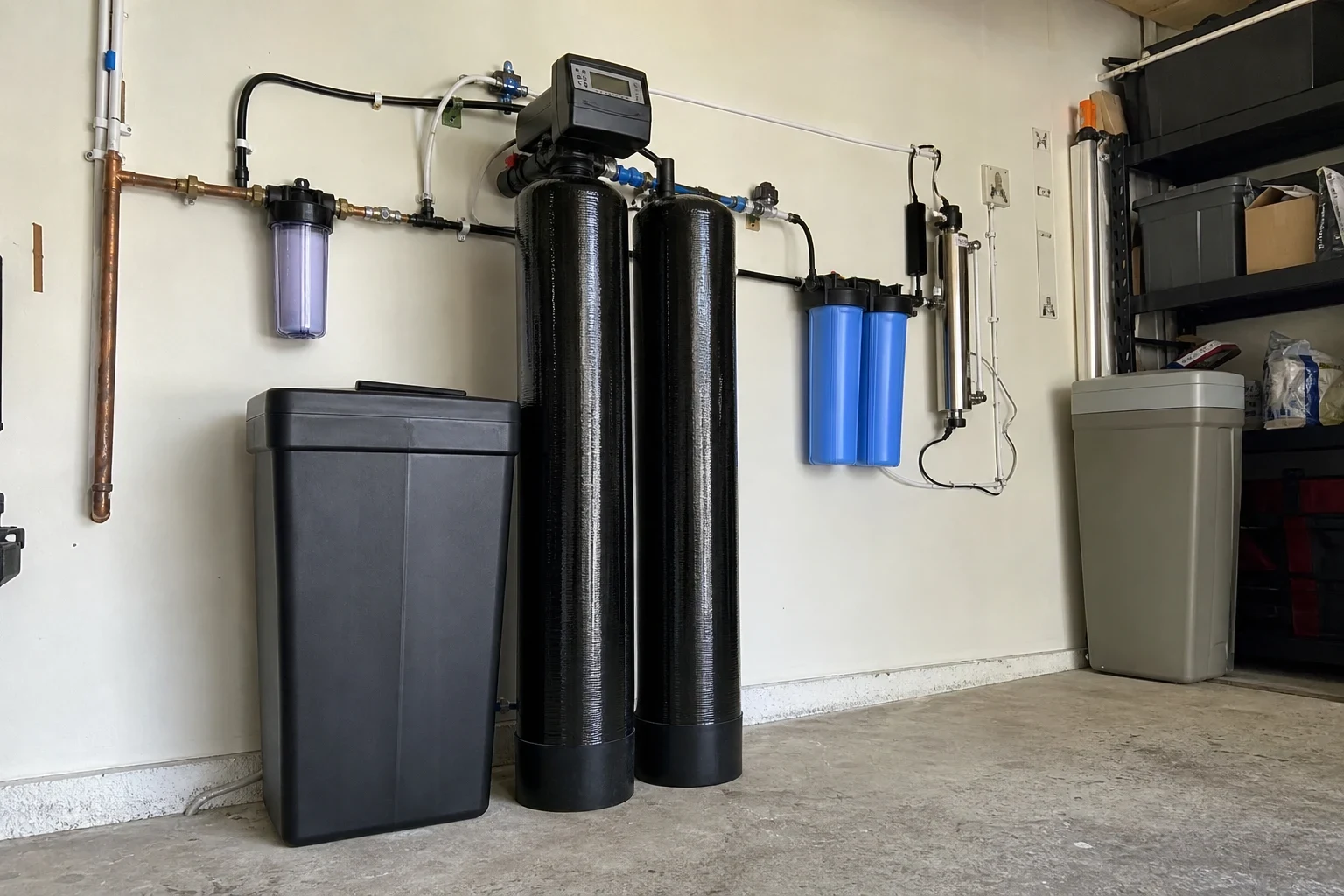
We draw a sample, read hardness and iron, and look at where the main line enters your home, often a pre-plumbed loop in the garage. You hear what each number means in plain terms.
- 2
Sizing and pricing
Based on hardness, iron and household size, we recommend a grain capacity and give you installed system pricing by phone, with the parts named.
- 3
Install day
A partner plumber shuts off the water, cuts in the bypass valve, sets the resin tank and brine tank on a level spot and runs the drain line. Most of your home has water back the same visit.
- 4
Startup and retest
We program the control valve, run a manual regeneration and retest at a tap to confirm the water is coming out soft. We clean up and show you how to add salt and use the bypass.
Water Softener Questions We Hear Most
How can I tell if my water is hard enough for a softener?
Measure it. Scale you can see is a good clue, but we take a hardness reading in grains per gallon and recommend from that figure. If the number doesn't support a softener, you'll hear that from us.
Does softened water taste like salt?
Most people can't taste any salt. The amount of sodium added depends on how hard the water started out, and at the levels we usually measure it stays small. For drinking and cooking water with as little sodium as possible, a reverse osmosis unit at the kitchen sink removes it.
Will you swap out my current softener?
Yes. We start by checking the resin, the control valve and the brine tank for a salt bridge, because a repair or fresh resin can sometimes revive an older unit. If a new one is the better choice, we keep the existing loop and drain when they're in good shape.
Who does the actual install work?
On every job, a partner plumber handles the hands-on part: cutting in the bypass, placing the tanks and running the drain line. We take care of the water test, the sizing and programming the valve, and you deal with us from your first call to startup.
What maintenance does a softener need?
Mainly topping up salt in the brine tank and breaking any crust that forms on the surface. We show you how at startup, and the bypass valve lets you take the unit offline if it ever needs work.
What are customers saying?
Right now our Google profile has 3 five-star Google reviews. That's a modest number, and we intend to add to it the way we earned those: test the water first, size each unit with care and leave the work area clean.
Start With Your Hardness Number
A free water test tells us whether a softener is the right fix and what size your home needs. From there we can give you installed system pricing by phone.